
Critical Rule Change for Google Analytics/Ads Users
The final countdown is on. The European Digital Markets Act (DMA) comes into force at the start of March 2024, Wednesday the 6th to be exact. With this, Google will be implementing “Consent Mode V2” as a mandatory change to all Google services. Wayhay say Yellow Cherry!
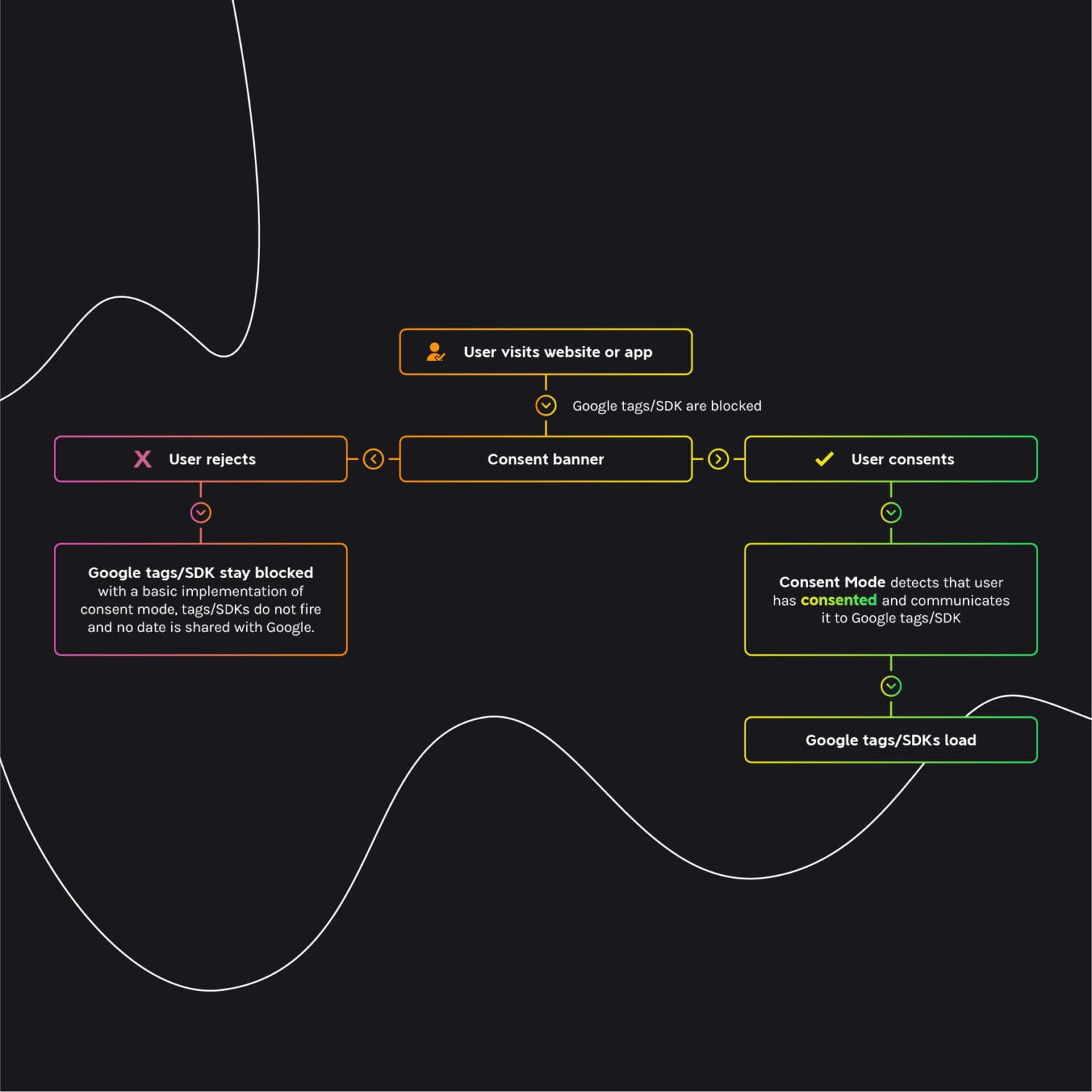
What does this mean? It is no longer enough to have simple ‘opt-in’ or ‘opt-out’ cookie options on your website, now you need to allow users to specify their more granular cookie use preferences. Cookies, or little data files, are used to store information within web browsers to give users a more personal and convenient experience, saving information on your preferences, shopping cart, login details etc. Currently, when you open a website, often you are met with the ‘choice’ of allowing cookies or not, and if you choose no, it goes in the huff and won’t let you use the website. That is all about to change. These banner pop-ups, typically found at the footer of a webpage, will soon be required to have a 3rd option to explicitly let users modify the cookie preferences in order to send Google the right information, some of the information that will be invaluable for analytics.
This change will affect the European Economic Area + the UK, and its also about to impact advertising. The effects of this act could be quite substantial.
The level of data gathered and seen in Google Analytics is going to be heavily influenced by how a user responds to a cookie notice, more so than previously. If cookies are ignored, or rejected, then there will be some surface-level, anonymised data, but you can expect it to come with some gaps. If a user denies cookies, Google will resort to gathering modelled data. This means that the data will essentially be formed by Artificial Intelligence (AI) by making an estimate on data through observing trends and patterns (such as device type, browser, and country) from those that do accept cookies.
From this, we can anticipate less targeted ads, possibly less affirmative data on user behaviour and greater misalignment and discrepancies between the logged conversions on your website versus the actual figures (e.g. contact form submissions). So, what do you need to do now? Comply with Google, of course.
Beyond the 6th March, we anticipate that the ability to paint a complete picture of a website’s data will reshape the metrics and reporting landscape that we are so familiar with. However, the alternative could be even more worrisome. Not complying with the ‘Consent Mode V2’ could result in lost data, the suspension of some features in Google Ads (such as retargeting), possible penalties and broken conversion tracking, to name but a few. This could potentially knock off algorithms in ways that may make your advertising less cost efficient, and nobody wants that.
Your cookie banner acts as a signal or translator for Google and its correct implementation and configuration is essential. If you are running Google Ads with Yellow Cherry, or are on a monthly support contract with us, then you can sit back with a hot chocolate and a … biscuit, as we will make the necessary updates for you. If you need help making sure you are cookie compliant, no need to google, just get in touch with us!