
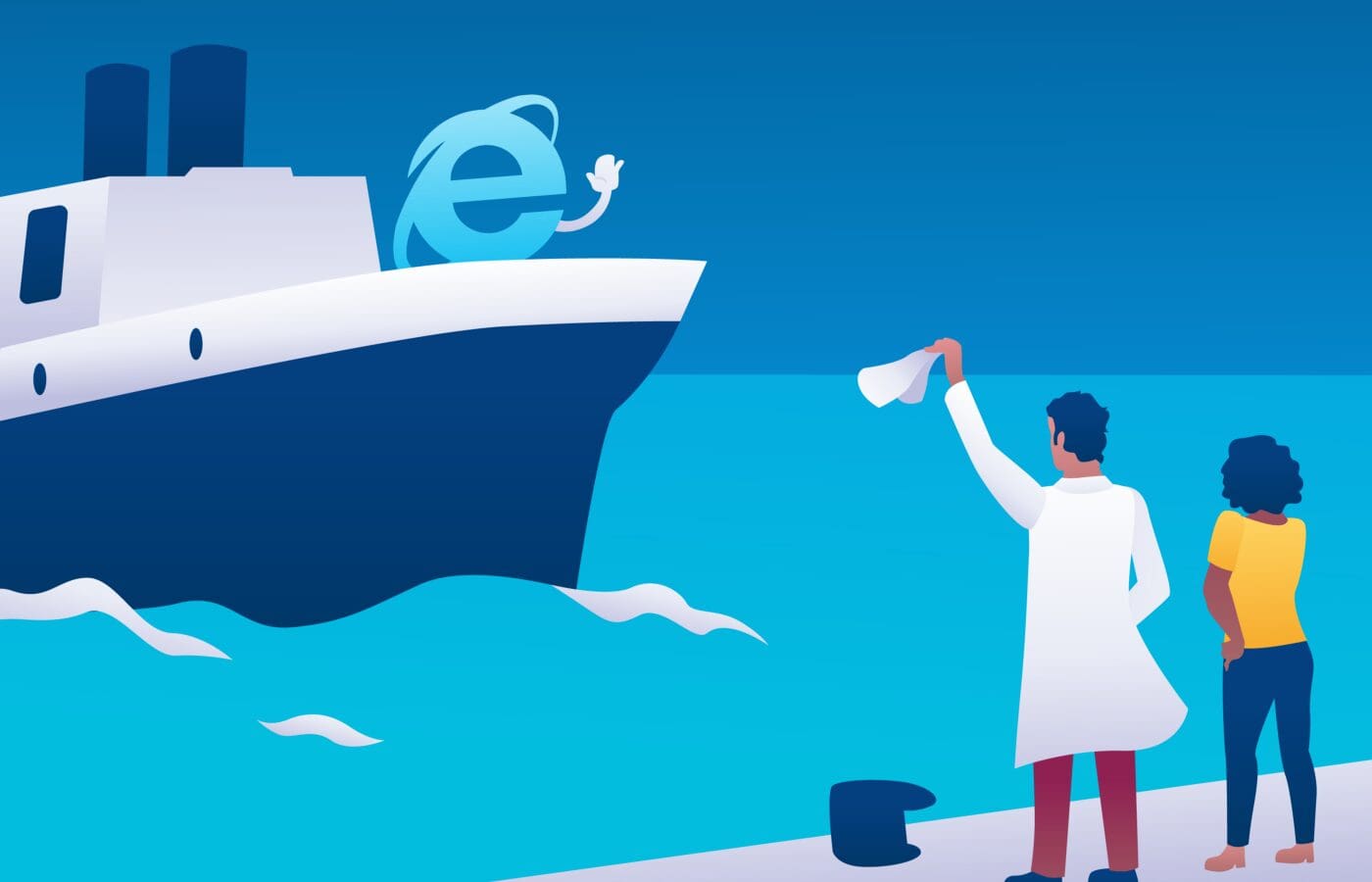
They think IE’s all over, it is now.
A sad day.
After a long career spanning 27 years and 11 different versions, the old faithful(ly slow) Internet Explorer will finally be disabled and removed from Windows in June 2022.
Internet Explorer (IE) was introduced to the world back in 1993 and almost single handedly helped shape the internet we know and love so much today. At it’s peak, IE had a near monopoly on internet browsers, having a 95% share in 2003, but alas this number steadily decreased with fierce competition from Chrome, Firefox and Safari. Today, IE holds a miniscule 0.6% of the market share. It is clear that it’s time is over. Finished, finito, fini, fertig, acabado. The final straw? Microsoft Edge,2016.
If you are reading this, then we are sure you will have fond memories of Internet Explorer, and maybe even fonder memories of all those IE memes…
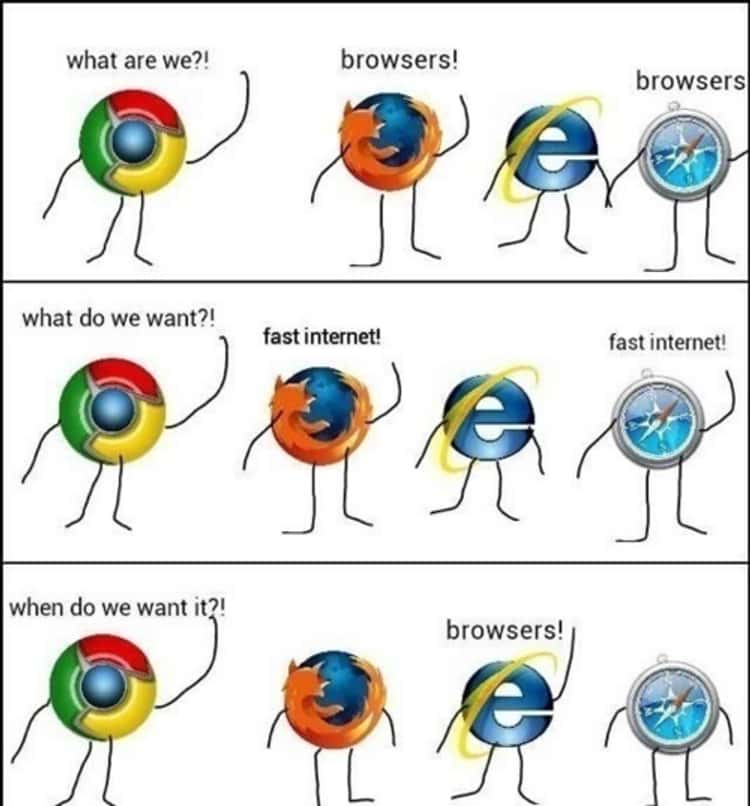
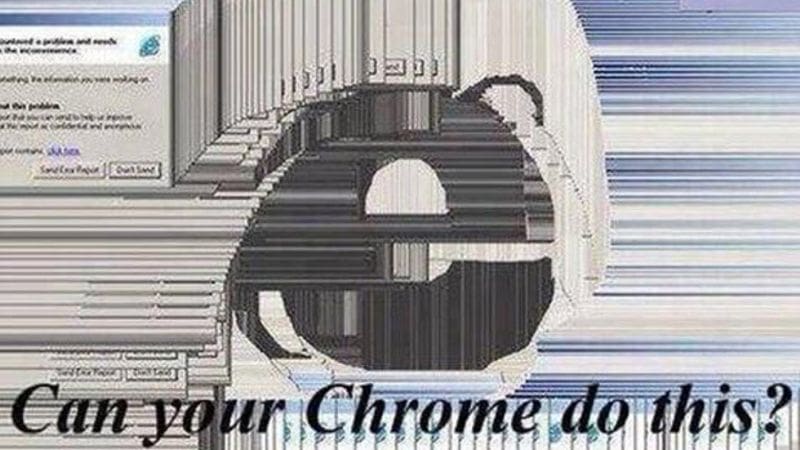
Famous for being too slow or not loading pages properly, IE became the worldwide punchline for many a tech/internet based joke. Unfortunately, most of these issues were caused by IE’s unique way of reading and displaying website code that usually required special workarounds in order for it to work correctly. Was there anything more frustrating than seeing those IE pop boxes (I stress the plural here…) exclaiming ‘Internet explorer has encountered a problem and needs to close. We are sorry for the inconvenience’? At least IE was always a good sport and took the jokes and memes on the chin, retorting in humorous ways.
It wasn’t all bad.
We might be nostalgic about all the shortcomings of IE, but we have a lot to thank IE for.
Firstly, free browsers. You wouldn’t dream of paying for a browser in this day and age, but go back to the pre IE heyday and you would have to pay for the privilege of Netscape. It wasn’t until IE integrated with Windows that IE browsers became free to download, meaning other browsers had to follow suit. Kind of ironic that IE became the most used browser for downloading other browsers then…
Nowadays, most browsers work in a similar but more predictable manner. Even going as far as using the now wide-spread Chromium engine developed by Google. Which is why websites generally look the same in most devices and browsers.
Short cuts and tabs icons? All down to IE. IE was the first browser to support these file types on desktops . So thank you, you saved us from typing in URLS repeatedly.
So, IE, an international icon, you were slow and frustrating, but loved all the same.
Going Forwards.
Rejoice hardcore IE fans, technically, support for IE won’t fully end until about 2033 when it will be phased out of Windows Server 2019. But for most of you, you should move onto a new browser before June.
If you enjoyed how IE worked then good news! Microsoft Edge will be releasing a mode that replicates IE functionality and it should work with any IE-only web app, making it easy for your business to use all your favourite sites on a single browser. It will use the integrated Chromium engine for modern sites, and the Trident MSHTML engine from Internet Explorer 11 (IE11) for legacy sites.
Are you thinking it is time to get your website up to date with the latest trends? Whether it is your website, marketing tactics, business cards or app, why not contact us today to see what Yellow Cherry can do for you.