

You Wouldn’t Leave Your Front Door Wide Open. So Why Leave Your Website Vulnerable?
Recent PHP security vulnerabilities are a reminder that website maintenance shouldn’t be an afterthought. Imagine spending thousands of pounds on your dream home. You’ve spent months planning, choosing the perfect design and getting everything just right.
Then, every morning, you head off to work and leave the front door wide open. Not just unlocked. Wide open. Anyone could wander in, help themselves to your belongings or cause damage.
Sounds ridiculous, doesn’t it?
But here’s the thing. Your website could be doing the digital equivalent, and you might not even realise it. Just because your website looks great and works perfectly doesn’t mean it’s secure behind the scenes. And the recent PHP security vulnerabilities are a reminder that sometimes the biggest risks are the ones you can’t see.
What happened with PHP?
In October 2026, two critical security vulnerabilities were discovered and addressed in PHP, a programming language that powers a huge number of websites, including those built using platforms such as WordPress.
The vulnerabilities, known as CVE-2026-109618 and CVE-2026-109619, were particularly serious because were both given a critical severity score of 9.2 out of 10. This meant they could potentially allow cybercriminals to execute malicious code on vulnerable web servers without needing a username or password.
In simple terms, under certain conditions, attackers could potentially gain access to systems they should never be able to reach. That doesn’t mean every one of those websites has been compromised. But it does highlight how much outdated technology is still in use.
And it brings us back to that house with the unlocked doors.

Your website might look secure. But are the doors actually locked?
Think of your website as a house. Your website’s design is what people see from the outside. It’s the freshly painted walls, the lovely front garden and the welcoming entrance.
But underneath all that, there’s a lot more going on. Just like a house relies on locks, windows, doors and structural foundations, your website relies on different pieces of technology working together.
And each one needs looking after.
An outdated theme? Everything looks good, but is it secure?
Think of your website’s theme as the walls, windows and doors of your home. From the outside, everything looks perfectly fine. But what if there’s a weakness you don’t know about?
Have you ever locked yourself out, given the door handle a few pushes and pulls and somehow managed to get back in? You weren’t expecting it to work, but it did. Now imagine someone else discovering that weakness.
Your website’s theme can be much the same. It might look fantastic, but if it’s outdated, there could be security vulnerabilities hiding behind that polished appearance. Because a good-looking website isn’t necessarily a secure one.

An outdated plugin? Everything might be working, but is it working safely?
Think of your website’s plugins as the appliances that make your house functional. Your oven, heating and everyday essentials all have a job to do. But just because something works doesn’t mean everything is fine behind the scenes.
An ageing boiler might still heat your home, even if there’s a problem developing. Your website’s plugins are much the same. They might still be processing bookings, displaying forms or running your online shop, but outdated plugins can contain hidden security vulnerabilities.
Just like you’d want to catch a problem with your boiler early, keeping your plugins updated can help prevent bigger problems. And that’s something Yellow Cherry can help you stay on top of.
Outdated PHP? What if the foundations of your house weren’t as solid as you thought?
Think of PHP as part of your home’s foundations. You don’t see them every day, but they’re essential to keeping everything running. You could have the most beautiful house on the street, but what if there was a problem underneath it all? Everything might look fine from the outside, while damage develops beneath the surface. By the time you notice, a small problem could have become an expensive one.
Your website’s PHP works in much the same way. It’s part of the underlying technology keeping everything running, and unpatched vulnerabilities can create opportunities for attackers.
Because even the most beautiful house can have serious problems if you neglect what’s underneath it. Not sure what’s going on behind the scenes of your website? Yellow Cherry can help you find out.

What happens if someone does get in?
Imagine coming home to find your front door wide open, your belongings stolen and your home damaged. Suddenly, you’re facing the time, money and stress of putting everything right. A website break-in can have similar consequences.
Depending on the attack, cybercriminals could potentially:
- Access sensitive business or customer information.
- Take your website offline, disrupting enquiries, bookings or sales.
- Redirect visitors to malicious websites.
- Add harmful code or unwanted content to your pages.
There’s also the impact on customer trust. A security warning, suspicious redirect or broken website doesn’t exactly inspire confidence. And if personal data is compromised, there may be additional responsibilities under UK data protection law. Nobody wants to deal with that, especially when regular maintenance and timely security updates can help reduce the risks.
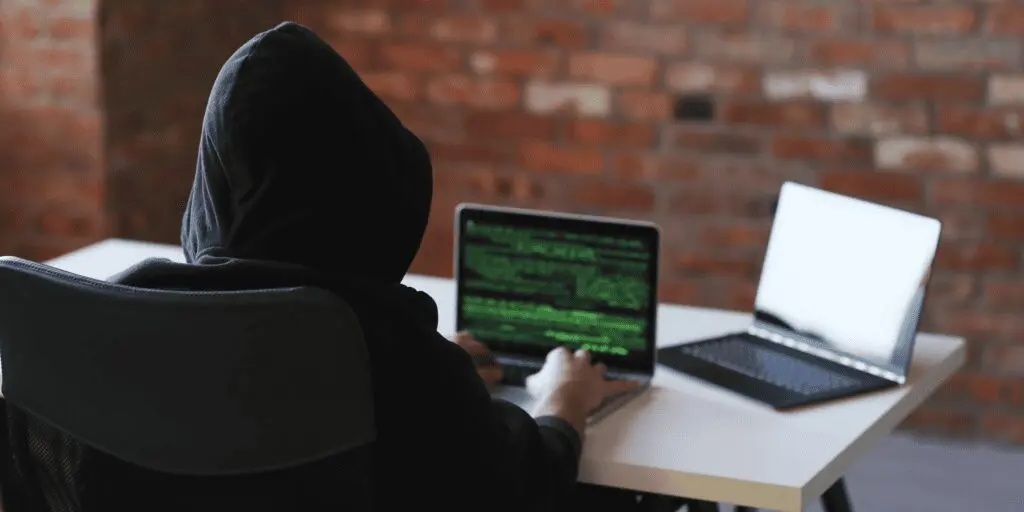
Who’s checking your locks?
A quick question: when was your website last checked?
If you’re not sure when your plugins were last updated, whether your PHP version is supported or when your most recent backup was taken, it might be time to find out.
Just like your home, your website needs regular attention to keep everything running smoothly and reduce the risk of unwanted visitors.
And that’s where Yellow Cherry can help.
Whether it’s keeping on top of essential updates and backups or adding an extra layer of security, our website maintenance packages are designed to help keep your website in good shape behind the scenes.
After all, you’ve invested time and money into your website. It makes sense to look after it.
Not sure who’s checking your website’s locks?
Get in touch with Yellow Cherry. We’re always happy to have a chat about keeping your website safe, secure and running as it should.